




Should You Script Your Podcast or Not?
Most podcasters assume they have two choices: script their podcast or just start talking and see what happens. In reality, neither approach works well on its own, especially if you are using podcasting as a marketing tool for your business. The most effective podcasts use a combination of both by scripting key parts of the episode and keeping the rest structured but conversational.
As a podcast coach, I’ve seen hundreds of podcasters struggle with the question of whether to fully script their episodes or not. It usually plays out the same way.
They start by winging it because it feels easy and natural. Then they listen back and realize they’ve wandered, repeated themselves, or lost the thread entirely. So they swing hard in the other direction, write everything out word-for-word, and suddenly their podcast sounds stiff and disconnected.
The problem isn’t scripting or not scripting. It’s relying entirely on one or the other.
Why Unscripted Podcasting Can Hurt an Expert’s Brand and Kill Audience Retention
There’s something appealing about the idea of just hitting record and letting your thoughts flow. It feels authentic, low-pressure, and maybe even a little exciting.
But in practice, most fully unscripted podcasts sound unfocused.
Without a clear structure, it’s easy to:
- Lose track of your main point
- Repeat ideas in slightly different ways
- Fill space with “ums,” pauses, or tangents
- Drift away from what your listener actually needs
Your listener can feel that lack of direction almost immediately. Even if your ideas are strong, the delivery makes it harder for them to follow along and stay engaged. They can tell you’re winging it, which makes them doubt if you’re a professional (who respects their time) at all!
That’s why completely unscripted podcasting is often a fast track to having no audience.
Why Fully Scripted Podcasts Can Sound Flat, Disconnected, and Inauthentic
After experiencing the trainwreck of going scriptless, a lot of podcasters decide the solution is to script everything. The podcast will be perfect if they script it…
They write out every word of their episode, hit record, and read it back.
Technically, it solves the rambling problem. But it introduces a new one.
It no longer sounds like you.
Instead of a conversation, it feels like a presentation. The pacing changes, the tone flattens out, and the natural rhythm of how you speak disappears.
Listeners don’t press play to be read to. They press play because they want to hear you think through something, explain something, or guide them through a problem.
When everything is scripted, that connection gets lost.
How to Structure a Podcast Episode so it Sounds Natural and Focused
The solution isn’t choosing between scripted and unscripted.
It’s all about choosing structure. A sweet, cookie-like structure.
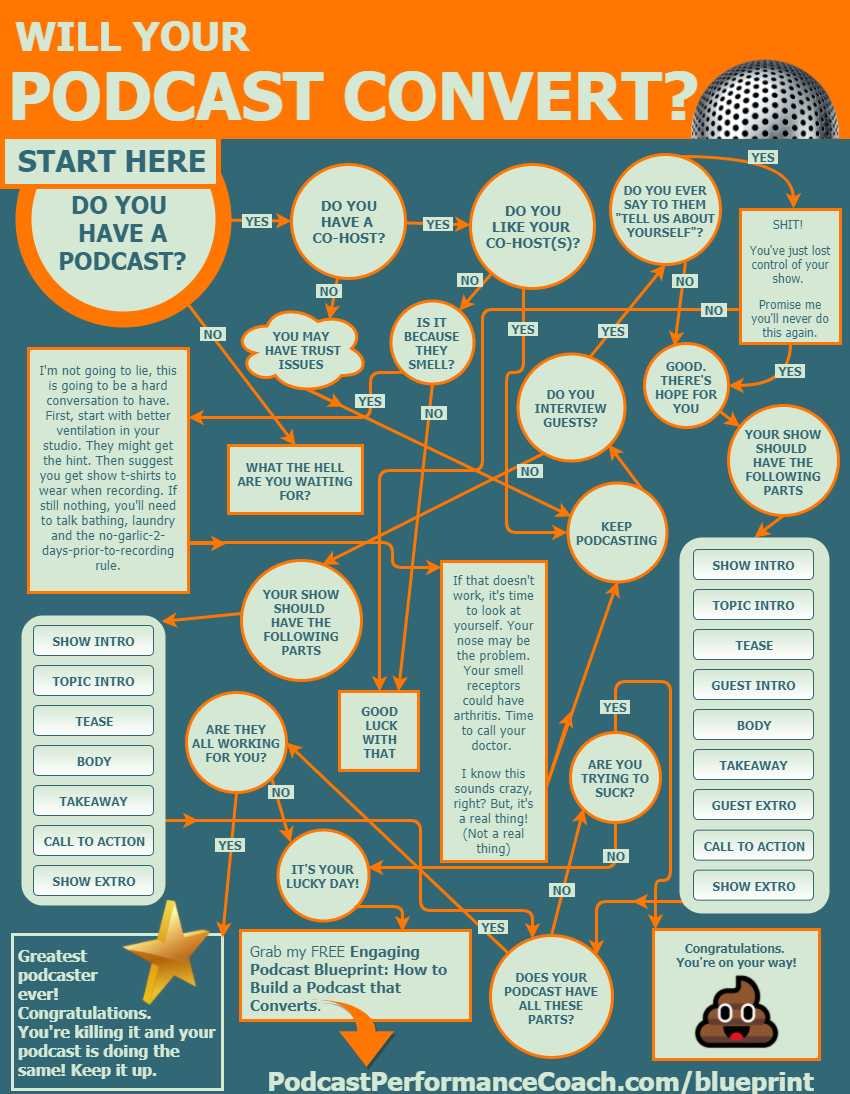
Think of your podcast like an Oreo cookie.
You’ve got two solid pieces on the outside and a more flexible centre in the middle.
That’s what your listeners want from your podcast – structure on either end of the episode and something ooey-gooey in the middle.
What Parts of Your Podcast Should Be Scripted?
Your intro (top) and your outro (bottom) are where scripting really helps.
Your intro sets the direction for the entire episode. This is where you clearly communicate what the listener is about to get and why it matters to them. When this part is loose or unclear, people don’t stick around. Give them a solid (chocolate cookie wafer) reason to keep listening.
Your outro is where you guide the listener toward the next step. Whether that’s a call to action, a resource, or an invitation to work with you, this is not something you want to figure out on the fly. If you’re unsure, your listener will be too. If this is the other chocolate wafer holding it all together, they’re going to feel more confident taking a bite.
Scripting the intro and outro gives your episode a strong start and a clear finish.
How to Keep the Middle of Your Podcast Conversational without Losing Direction
The middle of your episode is where you want more flexibility – just like that creamy center.
This is where your ideas live, where you explain, expand, share stories, and connect with your listener. Instead of scripting this section word for word, use simple bullet points or key ideas to guide you.
That way, you stay on track, but still sound like yourself.
When you allow this part to breathe a bit, your delivery becomes more natural. You’re focused on what you’re saying instead of how you’re saying it.
That’s when your podcast starts to feel like a real conversation instead of a performance. And that is when it connects with the audience.
Why Structure Builds Trust Faster than Perfection
I see you. As a podcast coach, I’ve met hundreds of you… You want your podcast to be as perfect as possible!
Newsflash: Your listener isn’t looking for perfect.
They’re looking for clarity and connection.
They want to understand what you’re saying, feel like it applies to them, and trust that you know what you’re talking about.
Structure helps you do that.
It keeps your message focused, your ideas organized, and your delivery easier to follow. At the same time, leaving space for natural conversation makes you feel more real and more relatable.
That combination builds trust much faster than a perfectly scripted performance ever could.
A Simple Way to Improve Your Podcast Immediately
If your episodes have been feeling stiff, or you find yourself re-recording over and over, trying to get everything just right, this is a sign you may be over-scripting.
Try this instead:
- Script your intro so your message is clear
- Script your outro so your next step is the obvious next step
- Use bullet points for the middle and let yourself talk
It’s a small shift, but it makes a big difference in how your podcast sounds and how it connects.
Final Verdict: Structure Your Podcast Instead of Scripting It
The goal isn’t to sound perfect. It’s to sound clear, helpful, and human.
When you rely entirely on scripting, you lose your natural voice. When you rely entirely on improvising, you lose direction.
But when you combine structure with flexibility, you get the best of both.
Your podcast feels focused, and it still sounds like you.
And that’s what keeps people listening.
If your podcast feels like an over-dunked Oreo, and you’re not sure how to find a balance that sets you up as an expert that people want to connect with… that’s exactly what we work through inside Podcast Tune-Up.
We help you dial in your structure, your messaging, and your delivery so your podcast actually connects and supports your business.
Related Podcasts:
109 Do You Want a Better Podcast? Don’t Wing It!
205 Podcast Script Tips: How to Improve Your Delivery and Performance
010 Should You Script Your Podcast